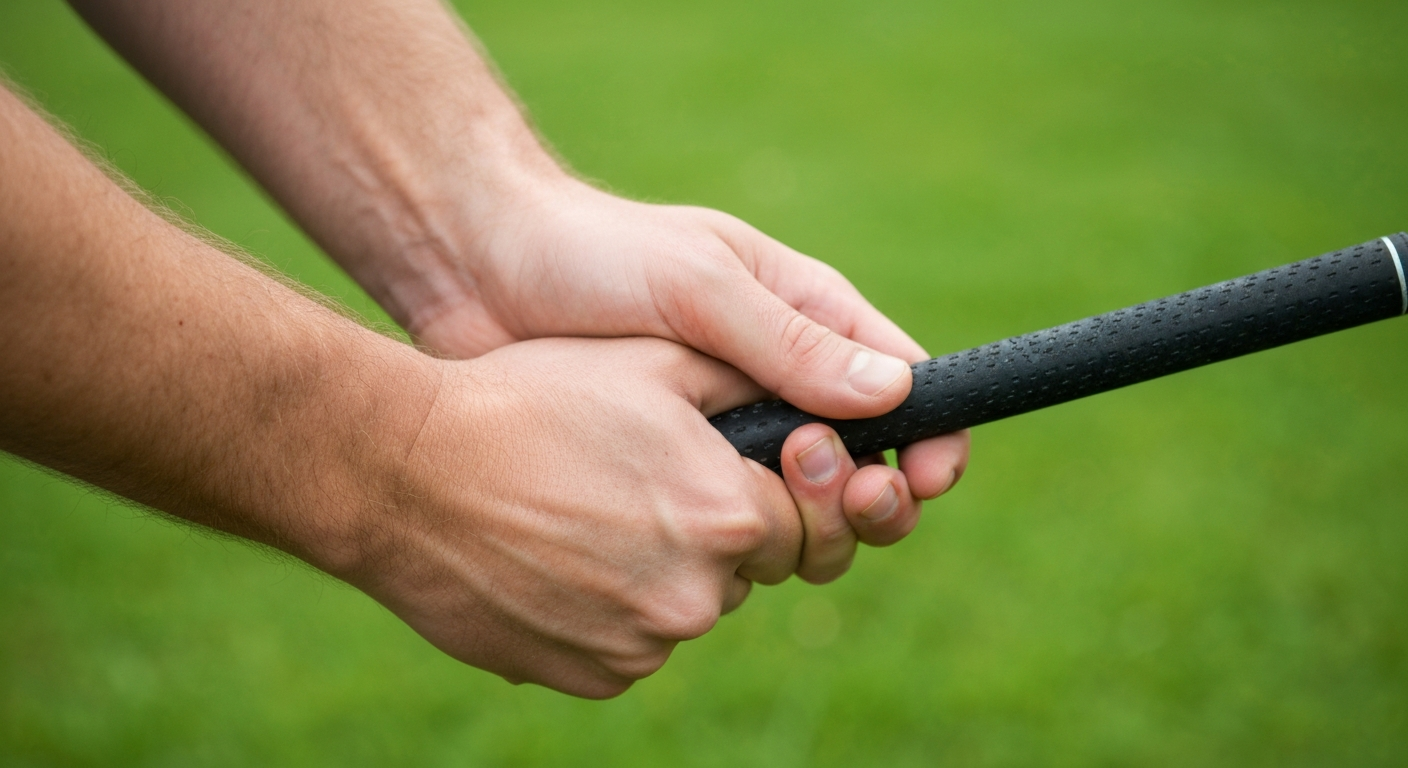
Why Your Golf Grip Matters More Than Anything
The grip is the single most important fundamental in golf. It controls the clubface angle at impact, which determines the direction and curvature of every shot you hit. A grip that is too weak (rotated too far left for a right-handed golfer) opens the clubface and causes slices. A grip that is too strong (rotated too far right) closes the face and causes hooks.
Every great golf instructor starts with the grip because it is the foundation upon which everything else is built. You can have a beautiful swing, but if your grip sends the clubface into impact at the wrong angle, the ball will not go where you want it. The good news: grip is one of the easiest things to change. It feels awkward for a few days, then becomes second nature.
Track Every Shot with Golf Scorecard
Free digital scorecard with handicap calculator, stats tracking, and shareable scorecards.
Download Free on iOSStep 1: The Lead Hand (Left Hand for Right-Handed Golfers)
Position the club: Place the club diagonally across the fingers of your left hand, running from the base of the pinky finger to the middle of the index finger. The club should rest more in the fingers than in the palm.
Close your hand: Wrap your fingers around the grip. The pad of your left thumb should sit on the right side of the shaft (slightly right of center). Your thumb runs down the top of the grip.
Check the V: The "V" formed by your left thumb and index finger should point toward your right shoulder. This is the neutral position. If it points more toward your chin, your grip is too weak. If it points past your right shoulder, it is too strong.
Knuckle test: Look down at your grip. You should see 2 to 2.5 knuckles of your left hand. Seeing 1 knuckle means your grip is weak; seeing 3 or more means it is strong.
Step 2: Connecting the Hands: Three Grip Types
Interlocking Grip
The pinky finger of the right hand interlocks (intertwines) with the index finger of the left hand. This creates a tight connection between the hands and is favored by players with smaller hands or shorter fingers.
Famous users: Tiger Woods, Jack Nicklaus, Rory McIlroy.
Pros: Locks the hands together firmly, feels secure, good for smaller hands.
Cons: Can feel uncomfortable at first, may cause pinching between the fingers, some players find it restricts wrist freedom.
Overlapping (Vardon) Grip
The pinky finger of the right hand rests on top of (overlaps) the gap between the index and middle fingers of the left hand. Named after Harry Vardon, the legendary golfer who popularized it in the early 1900s.
Famous users: Ben Hogan, Phil Mickelson, the majority of PGA Tour professionals.
Pros: Most popular grip on tour, natural feel for medium to large hands, allows good wrist mobility.
Cons: Can feel loose for players with small hands, the pinky may slip out of position during the swing.
Ten-Finger (Baseball) Grip
All ten fingers wrap around the club with no interlocking or overlapping. The right pinky sits next to the left index finger. This is the most natural feeling grip and is recommended for most beginners, juniors, and players with arthritis or hand injuries.
Famous users: Bob Estes, some LPGA and Champions Tour professionals.
Pros: Most comfortable, easiest to learn, good for beginners, seniors, and anyone with hand issues.
Cons: Hands can work independently during the swing, may reduce control at higher swing speeds.
Strong vs Weak vs Neutral Grip
"Strong" and "weak" do not refer to how hard you squeeze the club. They describe the rotational position of your hands on the grip and directly affect your clubface angle at impact.
| Grip Type | Hand Position | Clubface Tendency | Ball Flight |
|---|---|---|---|
| Weak | Rotated left (1 knuckle visible) | Open at impact | Fade / Slice |
| Neutral | Standard (2-2.5 knuckles visible) | Square at impact | Straight |
| Strong | Rotated right (3+ knuckles visible) | Closed at impact | Draw / Hook |
Most instructors recommend starting with a neutral grip and adjusting from there based on your ball flight. If you slice, strengthening your grip slightly is often the quickest fix. If you hook, weakening it can help. The key is making small adjustments and hitting balls to see the result.
Grip Pressure: Hold It Like a Bird
Sam Snead famously said to grip the club like you are holding a baby bird: firm enough that it cannot fly away, gentle enough not to hurt it. On a pressure scale of 1 (barely touching) to 10 (white-knuckle death grip), aim for a 3 to 4.
Light grip pressure promotes a smooth tempo, faster clubhead speed through the hitting zone, and better feel for the clubhead throughout the swing. Excessive grip pressure creates tension in the forearms, shoulders, and neck, leading to a restricted swing and reduced distance.
The pressure should remain relatively constant throughout the swing. A common mistake is gripping loosely at address and then squeezing tightly during the downswing. Practice maintaining even pressure from takeaway to follow-through.
5 Common Grip Mistakes to Avoid
Gripping in the Palm
The club should sit in the fingers, not the palm. A palm grip restricts wrist hinge and reduces clubhead speed. Check that the club runs diagonally across the fingers.
Right Hand Too Far Under
Many beginners rotate the right hand too far under the club (strong position), which leads to hooks and pull shots. The lifeline of the right palm should sit on top of the left thumb.
Thumbs Straight Down the Shaft
Both thumbs should be slightly to the side, not directly on top of the shaft. The left thumb goes slightly right of center, and the right thumb goes slightly left of center.
Grip Too Tight
Tension kills golf swings. If you see white knuckles or feel tension in your forearms at address, you are gripping too hard. Relax and let the club do the work.
Not Checking Your Grip Regularly
Grips drift over time without you noticing. Before every range session, consciously check your grip position. It takes 5 seconds and prevents bad habits from creeping in.
Improve Your Grip, Improve Your Score
Track how your grip changes affect your scores with Golf Scorecard App. Monitor your improvement with stats, handicap tracking, and round history.